How Local Recommenders Are Reshaping the African Booking Economy
June 14, 2026
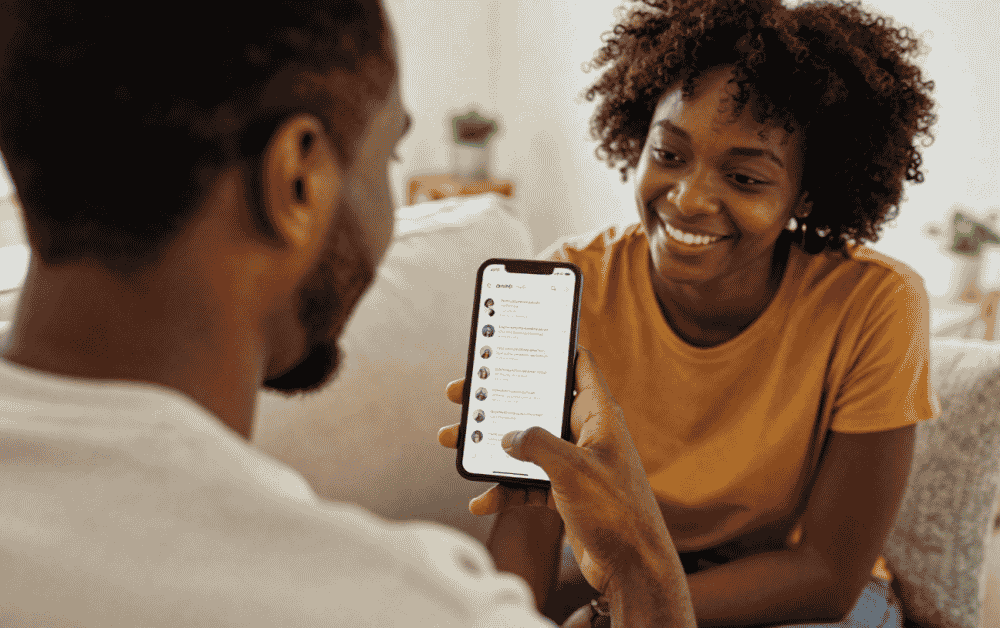
The forgotten majority of the African creator economy
When most people talk about Africa's creator economy, they think about a small group of macro-influencers with hundreds of thousands of followers, sponsored by global brands and producing polished content for Instagram and TikTok.
This picture is real, but it represents less than 1% of the actual recommendation activity happening across the continent every single day.
The other 99% is invisible. It's the friend forwarding a restaurant name on a WhatsApp group. It's the colleague mentioning a great hotel in Dakar at lunch. It's the cousin texting a spa recommendation before a girls' weekend. These conversations happen by the millions every day across African cities, and they drive an enormous volume of actual bookings.
Until now, this entire economy was untracked, unmonetized, and largely ignored by tech platforms. With its V2 launched in June 2026, Trenderz is the first platform to build the infrastructure that turns these everyday recommendations into measurable revenue for the people who make them.
Who are local recommenders, and how are they different from influencers?
A local recommender is anyone who shares their favorite places, experiences, and addresses with their personal network, without necessarily having a public content creator profile.
Local recommenders typically have:
- Between 200 and 5,000 active WhatsApp contacts
- Modest Instagram or TikTok presence (often under 5,000 followers)
- No fixed content schedule or editorial line
- Authentic enthusiasm for their favorite restaurants, hotels, spas, and activities
- Deep trust within their immediate community
They are not professional creators. They don't see themselves as influencers. They are simply people whose opinion their network values when making spending decisions.
The conversion advantage
Here's what Trenderz data from 2024 to 2026 reveals: local recommenders convert 3 to 5 times better than macro-influencers when measured by booking volume per audience touched.
The reason is structural, not accidental:
- Geographic precision: a recommender's network is by definition concentrated around them. Their friends live in the same city, frequent the same neighborhoods, share similar purchasing power.
- Trust transfer: when a friend recommends a place via personal message, the trust signal is infinitely stronger than a sponsored Instagram post.
- Contextual relevance: a WhatsApp recommendation typically responds to a real, immediate question ("where should we eat tonight?") whereas social media content is consumed passively.
- No commercial bias perception: audiences assume macro-influencers are paid; they assume their friends are sincere.
Why African macro-influencers underperform compared to global benchmarks
African macro-influencers face structural challenges that limit their actual conversion power for local hospitality businesses:
Dispersed audiences
A creator with 200,000 followers in francophone Africa typically has audiences split across France, Côte d'Ivoire, Senegal, and the diaspora in North America. For an Abidjan hotel, only 20-30% of that audience is actually addressable.
Collaboration fatigue
Top macro-creators are approached by multiple establishments per month. Their audience sees a constant stream of "this place is amazing" recommendations, eroding credibility over time.
Mismatch with African purchase behavior
African urban consumers make many of their hospitality purchase decisions via WhatsApp groups, family conversations, and one-to-one messages, not via Instagram feeds. Macro-creators dominate the feed but not the decision context.
The economics that make this possible for the first time
Local recommenders have always existed. What's new is the infrastructure that lets them earn from their recommendations without disrupting how they naturally communicate.
What Trenderz V2 enables
The V2 introduces three product layers:
- MyTrenderz public profile: every recommender gets a personal page (e.g., trenderz.io/me/aminadiop) where they pin their favorite places. Shareable as a single link on Instagram bio, WhatsApp status, or email signature.
- Personalized booking links: for any establishment on the platform, recommenders generate a unique trackable link in one tap. When their network books through it, the system attributes the transaction automatically.
- Mobile Money payouts: weekly automatic payments via Orange Money, MTN MoMo, Wave, Moov Money, or local bank transfer.
What it changes for establishments
For African hotels, restaurants, and spas, the local recommender layer adds something fundamentally new: access to the actual conversion channel, not just the visibility channel.
A boutique hotel in Saly working with 50 local recommenders typically generates 80-120 attributable bookings per quarter, with average booking value 20% higher than direct OTA bookings (because guests come pre-qualified with trust).
Compare this to working with one macro-influencer at 200,000 followers: typically 5-15 attributable bookings per campaign, at significantly higher cost.
Real numbers from across Africa in 2026
Based on Trenderz platform data from May 2026:
- Average local recommender earns between 25,000 and 80,000 FCFA per month (45 to 145 USD)
- Top 5% of recommenders earn 150,000 to 400,000 FCFA per month
- Median time from signup to first booking: 7 days
- Average commission per hotel booking: 3,000 FCFA
- Average commission per restaurant booking: 1,500 FCFA
- Recommender retention rate at 6 months: 67%
Why this matters for the broader African digital economy
The local recommender model is not just a Trenderz product feature. It represents a structural shift in how value flows in African digital commerce.
For two decades, African digital commerce has been dominated by platforms designed for Western user behavior: heavy reliance on credit cards, English-first interfaces, content discovery models built around feeds, payment systems disconnected from Mobile Money.
The recommendation economy challenges this assumption. It says: African digital commerce should be built around how Africans actually communicate, decide, and pay. WhatsApp is the discovery layer. Personal trust is the conversion layer. Mobile Money is the settlement layer.
Trenderz V2 is the first booking platform built natively on these three layers.
What's next: anglophone expansion
Until June 2026, the local recommender model has been tested in francophone Africa (Côte d'Ivoire, Senegal, Cameroon, Benin, DRC). Starting with the V2 launch, Trenderz is bringing the model to anglophone Africa, beginning with South Africa.
The cultural translation challenge is real: anglophone consumers use slightly different platforms (more Twitter, more LinkedIn, more long-form content), different Mobile Money providers, different content styles. But the underlying behavior is identical: personal recommendation drives bookings, not paid advertising.
Watch this space for the South Africa launch in the coming weeks.
FAQ — The local recommender model
Is this just affiliate marketing rebranded?
No. Traditional affiliate marketing requires recommenders to drive traffic through public content (blog posts, social media). Local recommenders share via private channels (WhatsApp, DMs, email signatures), which traditional affiliate systems cannot track. Trenderz built tracking specifically for these private channels.
How is the recommender paid for a booking that comes through WhatsApp?
Each recommender generates personalized booking links via the Trenderz mobile app. When shared on WhatsApp and clicked, the link carries the recommender's ID. The booking is attributed automatically, regardless of which platform the click came from.
Can establishments choose which recommenders work with them?
Yes. Establishments can see recommender profiles, audience signals, and historical performance, and choose to invite specific recommenders to their loyalty program (with exclusive offers, VIP experiences, higher commissions).
What prevents fake or spam recommenders?
Trenderz verifies recommender identity at signup (phone, ID, KYC for higher tiers). Behavioral signals flag fake patterns. Establishments rate recommenders after each booking, building reputation scores.
Does this work in countries without strong Mobile Money penetration?
Yes. Mobile Money is the preferred payout method but not required. Local bank transfers, PayPal, and Wise are also supported in markets where they're more common.
Get started
If you run a hospitality business in Africa, the local recommender layer is now accessible alongside Trenderz creator marketing.
Register your business on Trenderz for free and start activating your local recommender community in days, not months.
Read more:


.webp)
.svg)

